Cross River Partnership
Cross River Partnership
2022
Transport Emissions Calculator
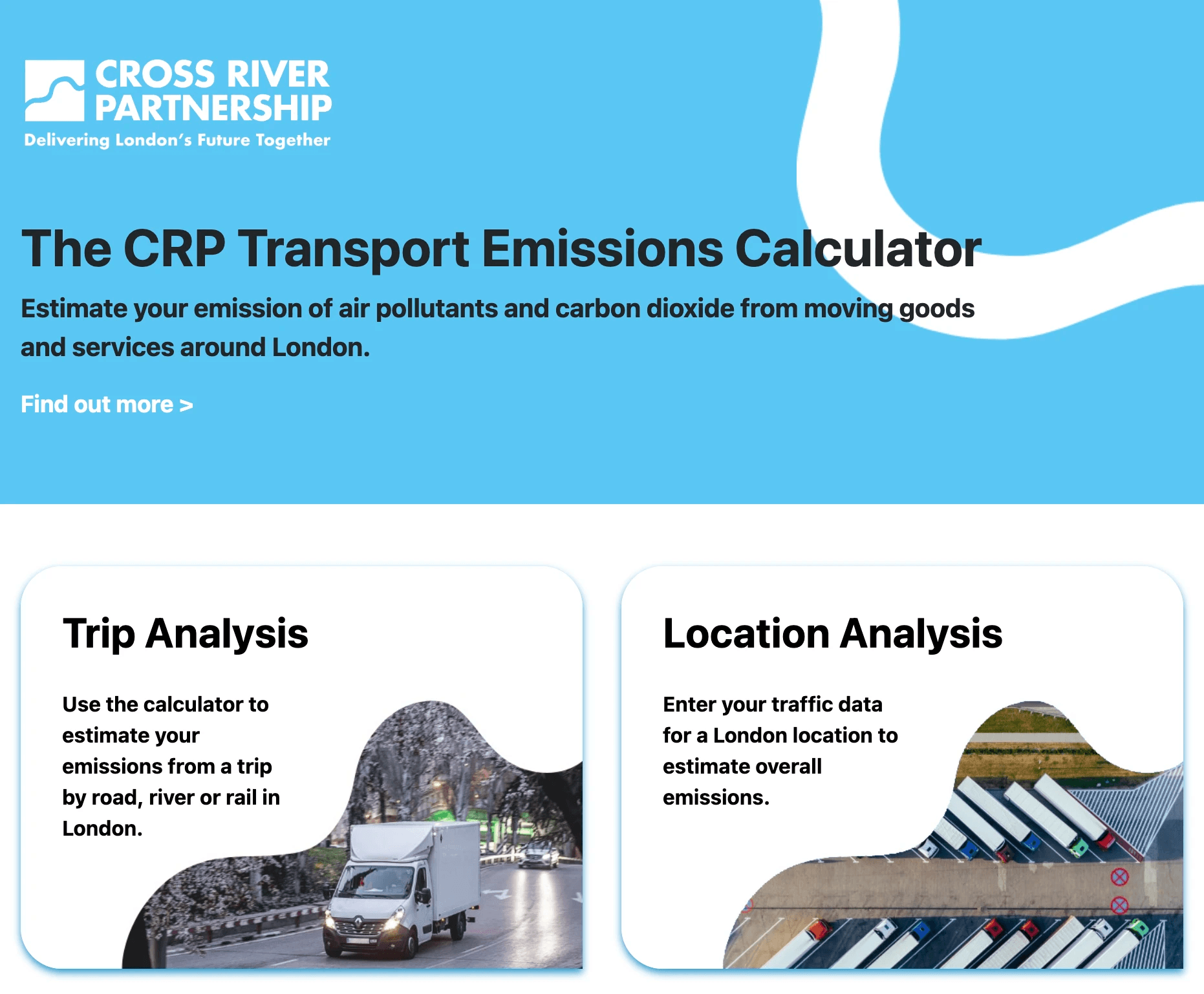
A practical transport emissions calculator enabling London businesses to estimate emission reductions from freight and delivery interventions, targeting the disproportionate pollution impact of freight vehicles on the city's air quality.
Research Services
Purpose
We set out to create a practical tool for Cross River Partnership and London businesses to understand the emissions impact of changing how goods move around the city. Freight transport accounts for just 15% of vehicle miles in London but produces 34% of nitrogen oxide emissions, 27% of fine particulate matter and a quarter of the city's total transport carbon emissions — making targeted freight interventions a powerful lever for cleaner air.
Approach
Designed and built an Excel-based calculator using Defra's Emissions Factors Toolkit (v11) with London-specific data from Transport for London
Covered road vehicles, rail, river vessels and active travel modes across multiple pollutants (NOx, PM10, PM2.5, CO2, SO2)
Built three analytical modules — Journey Analysis (comparing current vs alternative journeys), Multi-modal Journey Analysis (combined mode trips), and Combined Fleet Analysis (processing VivaCity sensor data)
Incorporated 10+ preset intervention scenarios, including off-peak delivery, electric vehicle switching, rail/water transfer and last-mile active travel
Delivered the tool without macros so it could be used easily by the Cross River Partnership team day-to-day
Created a companion online version for public demonstration
Results
We delivered for London businesses a practical, evidence-based way to quantify the emissions impact of changing how goods move around the city. The tool now serves as a cornerstone resource for understanding and reducing freight transport emissions across London.
Calculates emissions across 5 pollutants for 10+ vehicle types and up to 3 journey modes simultaneously
Processes up to 16 sensor locations and 30,000 rows of VivaCity traffic data
Enables comparison of 10+ intervention scenarios per journey
Online version launched for wider public access
Supports the deliverBEST programme, helping London businesses reduce freight emissions
Demonstrates that switching freight from road to rail, water, or electric vehicles can deliver significant reductions in NOx, PM2.5 and CO2