Cross River Partnership
Cross River Partnership
2020
Clean Air Routes for London
Measuring the air quality improvements of alternative walking and cycling routes across London to support the development of new Clean Air Routes and encourage public behaviour change toward healthier commuting.
Research Services
Purpose
We worked with Cross River Partnership to quantify the significant health benefits of alternative walking and cycling routes across London. Our monitoring was commissioned to compare pollution levels on 15 pairs of contrasting routes, providing evidence to support the development of new Clean Air Routes and encourage the public to choose healthier commuting options. This project demonstrates how strategic route planning can meaningfully reduce residents' exposure to harmful air pollutants during their daily journeys.
Approach
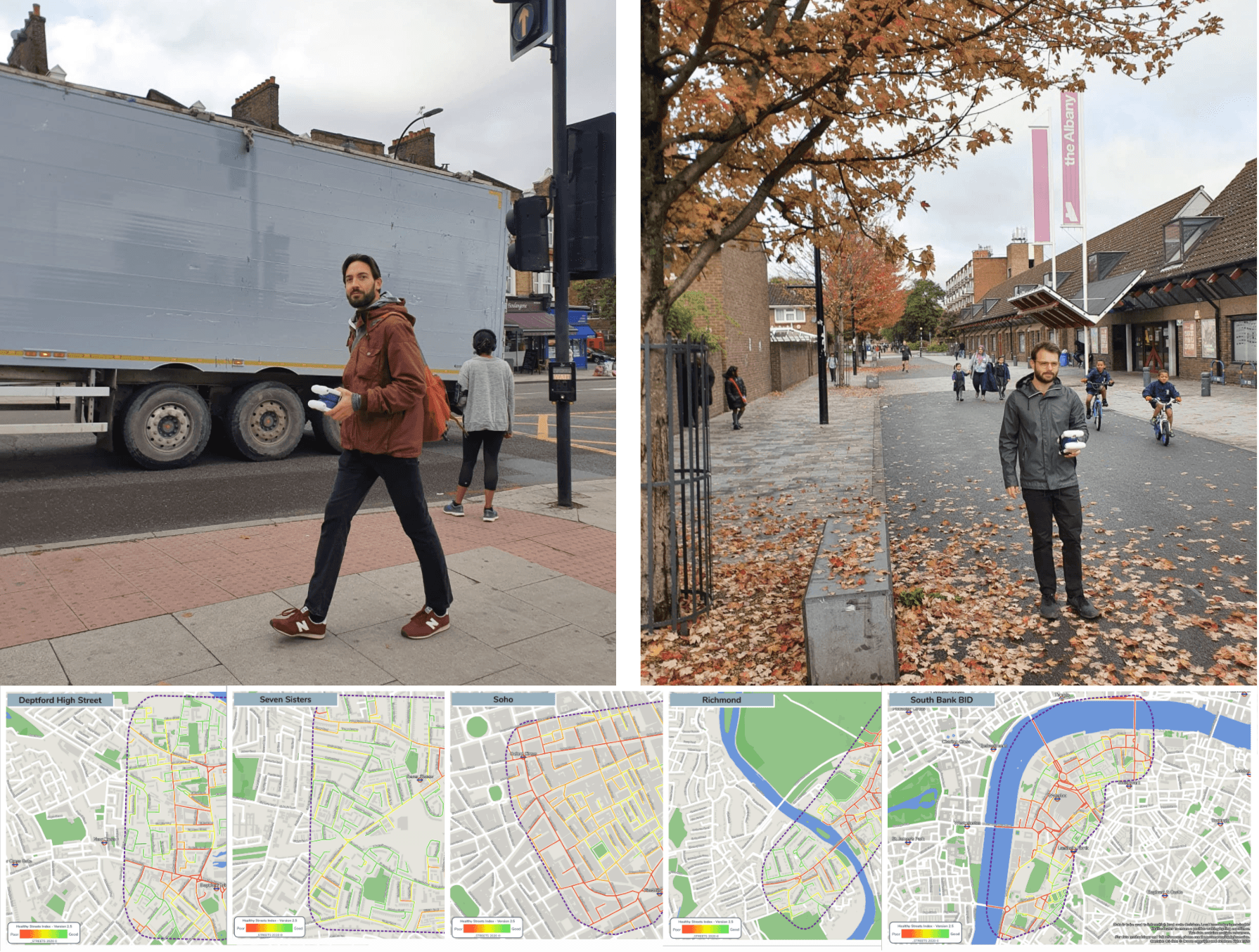
Created 15 alternative walking and cycling routes across London and monitored air pollution, comparing dedicated Clean Air Routes with standard routes
Used Aeroqual Series 500 handheld air quality sensors during peak commuting hours to capture real-world exposure
Measured NO2, PM2.5, PM10 and ozone simultaneously on Clean Air Routes and standard routes for direct comparison
Selected routes in collaboration with the Local Authority and BID partners using Environmental and Healthy Streets Index data maps
Conducted six monitoring runs per route pair for NO2 and three for particulate matter to ensure robust data
Assessed additional factors, including greenery, nature exposure and noise levels on all routes
Results
Our monitoring revealed that strategically planned Clean Air Routes deliver substantial air quality improvements for London commuters. On average, walkers and cyclists using Clean Air Routes experienced significantly lower pollution exposure compared to standard routes, with cleaner air combining with enhanced natural environments to create genuinely healthier journeys.
Average NO2 exposure 16% lower on Clean Air Routes (ranging from 6-23% reductions across individual route pairs)
Maximum reductions of up to 41% lower NO2 on the best-performing routes
Average NO2 concentrations 10-33 µg/m³ lower on Clean Air Routes
Up to 28% higher exposure to greenery and nature on Clean Air Routes
Consistently lower noise levels on Clean Air Routes, with improvements of 10 dB or more (perceived as approximately halving the sound)
14 new Clean Air Routes developed across London as part of the CAV3 programme
Strongest performing routes: Thames Riverside to Richmond (23% average NO2 reduction) and New Cross Gate to Deptford (20% average reduction)